Chrome, cat-eye, and jelly sound like three versions of the same shiny trend. They are not. One is a powder rubbed over gel, one is metal particles moved with a magnet, and one is a sheer tinted gel that lets light through. If you have never had any of them, the names tell you nothing about how the appointment goes, how long it takes, or how the finish looks on day ten instead of day one. This walkthrough follows a first appointment at Upscale Nails in Shelby step by step, so you know what is happening at each stage and what to watch for as the set wears.
First, the three finishes in plain terms
Chrome is a fine powder burnished onto a cured gel surface. Over white it reads as pearl. Over black it reads as mirror silver. Over a color it tints that color with a metallic sheen. The powder itself has no color staying power on its own, so it must be sealed under top coat, and the edges must be sealed especially well or the mirror rubs dull at the tips first.
Cat-eye uses gel polish loaded with tiny magnetic particles. While the polish is still wet, the technician holds a small magnet close to the nail for a few seconds. The particles line up along the magnet's field, creating a bright band or soft glow that shifts as you move your hand, like the stripe in a cat-eye stone. Each nail is magnetized and cured one at a time, because once the gel cures under the lamp, the pattern is locked.
Jelly is a translucent gel color, closer to tinted glass than to paint. Your nail line shows faintly through it, which is the point. Jellies are layered to deepen the color, often worn sheer in one or two coats for a syrupy, wet look, or layered over glitter or a milky base. They hide regrowth gracefully because the color near the cuticle is never fully opaque, but they also show the natural nail underneath, so staining or uneven nail color will be visible.
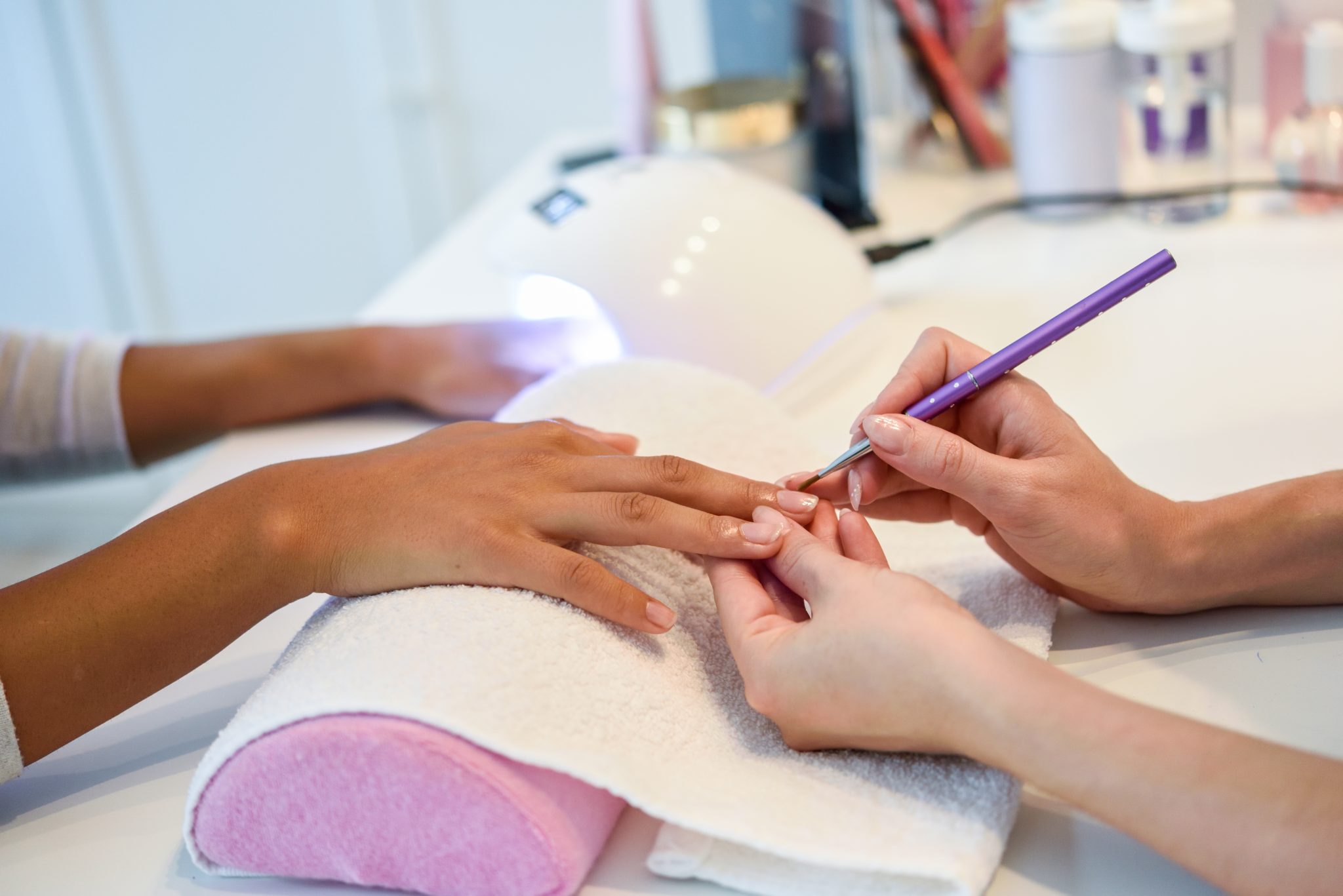
Your first appointment, step by step
- Prep and shape come first, no matter the finish. Old product is removed, cuticles are cleaned up, and the shape is finalized now, because chrome in particular shows every uneven edge and ridge underneath it.
- A base system goes on and cures. Most of these finishes sit over gel polish, builder gel, or dip, and that base decides durability. Tell your technician how you use your hands so the base matches your typing, work, and water exposure.
- Color is applied with the finish in mind. For chrome, the color under the powder is chosen deliberately, often black, white, or a saturated shade, because it becomes half the final result. For jelly, you will see the color built coat by coat and can stop when you like the depth.
- The effect is created nail by nail. Chrome powder is rubbed on with a small applicator until the surface turns reflective. Cat-eye polish is painted on, the magnet is hovered just above the wet gel to pull the light band into place, and that nail goes straight under the lamp before the pattern drifts.
- Sealing decides how long it lasts. Chrome needs a full top coat wrap over the free edge, sometimes two layers, because the powder layer itself is fragile. Cat-eye and jelly are sealed the same way, with attention to the tips where wear starts.
- You check the set in real light before you leave. Walk toward a window or the door. Chrome can look perfect under salon lights and show a dull patch in daylight, and the cat-eye band reads differently at arm's length than it does up close. A quick fix in the chair beats noticing it in the car.
How each finish wears over two to three weeks
Chrome is the highest-maintenance of the three, not because it chips more, but because it dulls. The mirror softens to a satin sheen with hand washing, lotion, and everyday friction, starting at the tips and the dominant hand. Many people like the softer look in week two, but if you want the full mirror for an event, book chrome close to that date. Dark chrome shades show scratches more than pale pearl shades do.
Cat-eye wears like the gel underneath it, which is to say well. The pattern does not fade, because the particles are sealed inside the gel. What changes is the surface gloss, refreshed at a fill. One practical note: a strong, narrow light band looks striking on longer nails and can look like a single stripe taking over a very short nail. On short nails, ask for a soft, diffused glow pattern instead, where the magnet is moved rather than held in one spot.
Jelly is the most forgiving as it grows out and the least forgiving about what is underneath. Because it is sheer, a white spot, a healing bruise under the nail, or yellowing from a previous dark polish will show through, softened but visible. If your natural nails are uneven in color right now, a milky jelly or a jelly layered over an opaque nude gives the same glossy depth without the show-through. Jelly also layers beautifully for a refresh: one more sheer coat at a fill can deepen a faded red jelly back to its original tone.

Choosing without regret
Match the finish to the next two weeks, not just the photo you saved. Chrome for a wedding weekend or photos, knowing it softens after. Cat-eye when you want something that draws comments the whole wear period and holds up at a keyboard. Jelly when you want color that grows out quietly and you like a lighter, glassy look, especially in spring and summer shades like coral, rose, and soft red that suit Shelby's warm months.
Bring the photo anyway.
Common questions
Which finish is best for short nails?
Jelly and a soft, diffused cat-eye both work well on short nails. Chrome works too, but a full mirror on a short nail shows tip dulling sooner, so pale pearl chrome is the most forgiving version.
Does cat-eye polish need a special magnet for every nail?
Yes, each nail is shaped with the magnet while the polish is wet, then cured right away to lock the pattern. That is why cat-eye appointments take a little longer than a plain gel color.
Can I put chrome over regular polish?
Chrome powder needs a cured gel surface to bond and seal correctly, so it is done over gel systems, not regular air-dry polish. Jelly and cat-eye effects are gel products as well.
Photos in this guide are representative stock images.
← All guides from Upscale Nails← Back to Upscale Nails